Overview
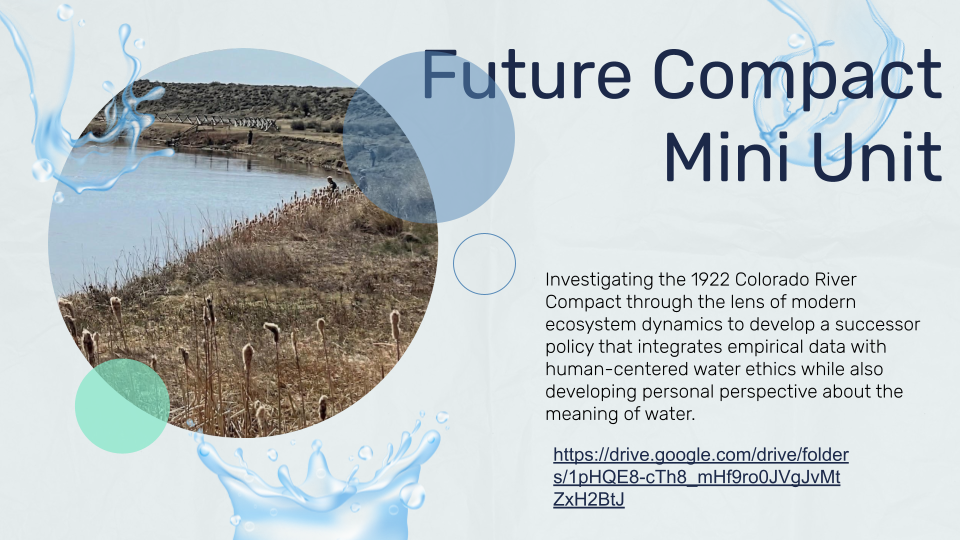
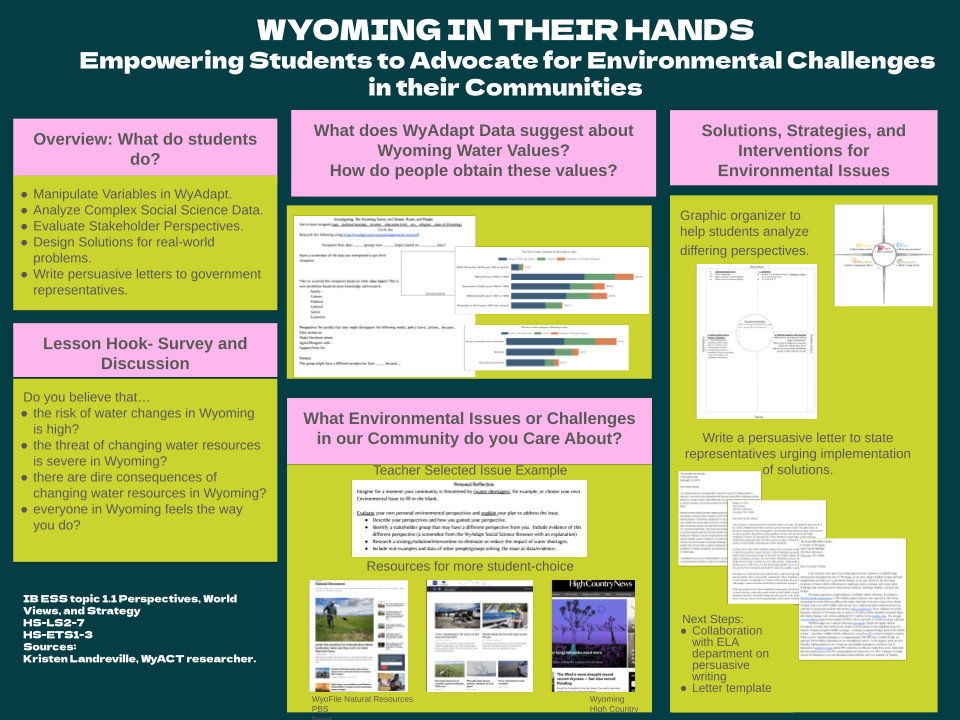
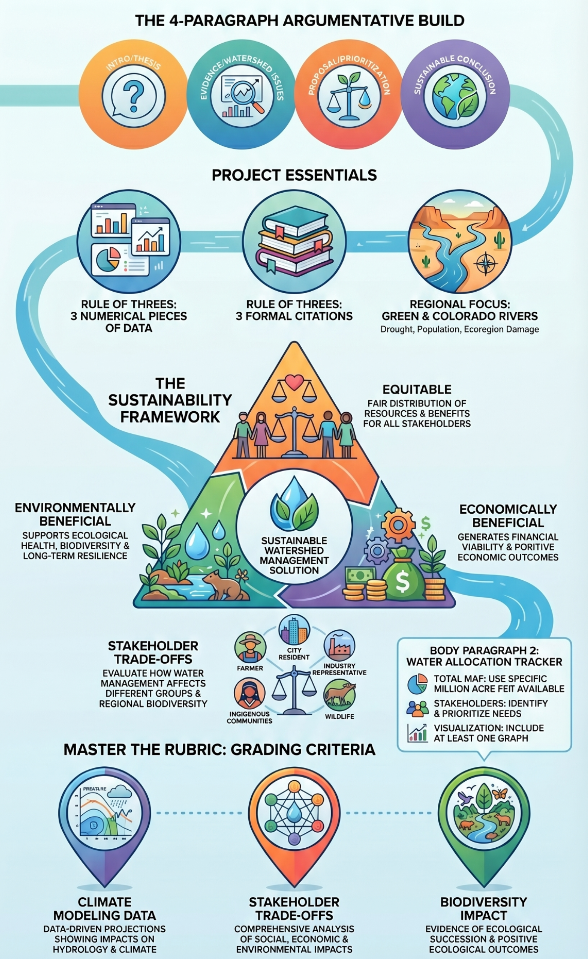
Jamie Bellian, a high school science teacher, designed an Environmental Science unit that incorporates interdisciplinary standards from Geometry, English and American History with the Life Science standards for a project-based assessment. Students investigate the Colorado River watershed and explore how climate change, resource management, and competing stakeholder priorities shape water use across the region. Through collaboration with community partners, field experiences, data analysis, and policy exploration, students build a foundational of the Colorado River Compact and examine challenges associated with future water allocation decisions.
Scroll down to the Resources & Links section of this page to check out her specific materials.
Goals
- Develop student understanding of environmental challenges associated with the Colorado River Watershed
- Support students in analyzing climate data and investigating changing environmental conditions
- Strengthen interdisciplinary skills through connections across science, math, history and literacy
- Encourage students to evaluate competing stakeholder perspectives and resource management decisions
- Engage students in developing evidence-based and sustainable solutions to complex environmental issues
Implementation & Outcomes
- Implemented with 9th-12th grade students
- Students engaged with community partners to build foundational understanding on resources, stakeholders, and climate change in the Colorado River Watershed
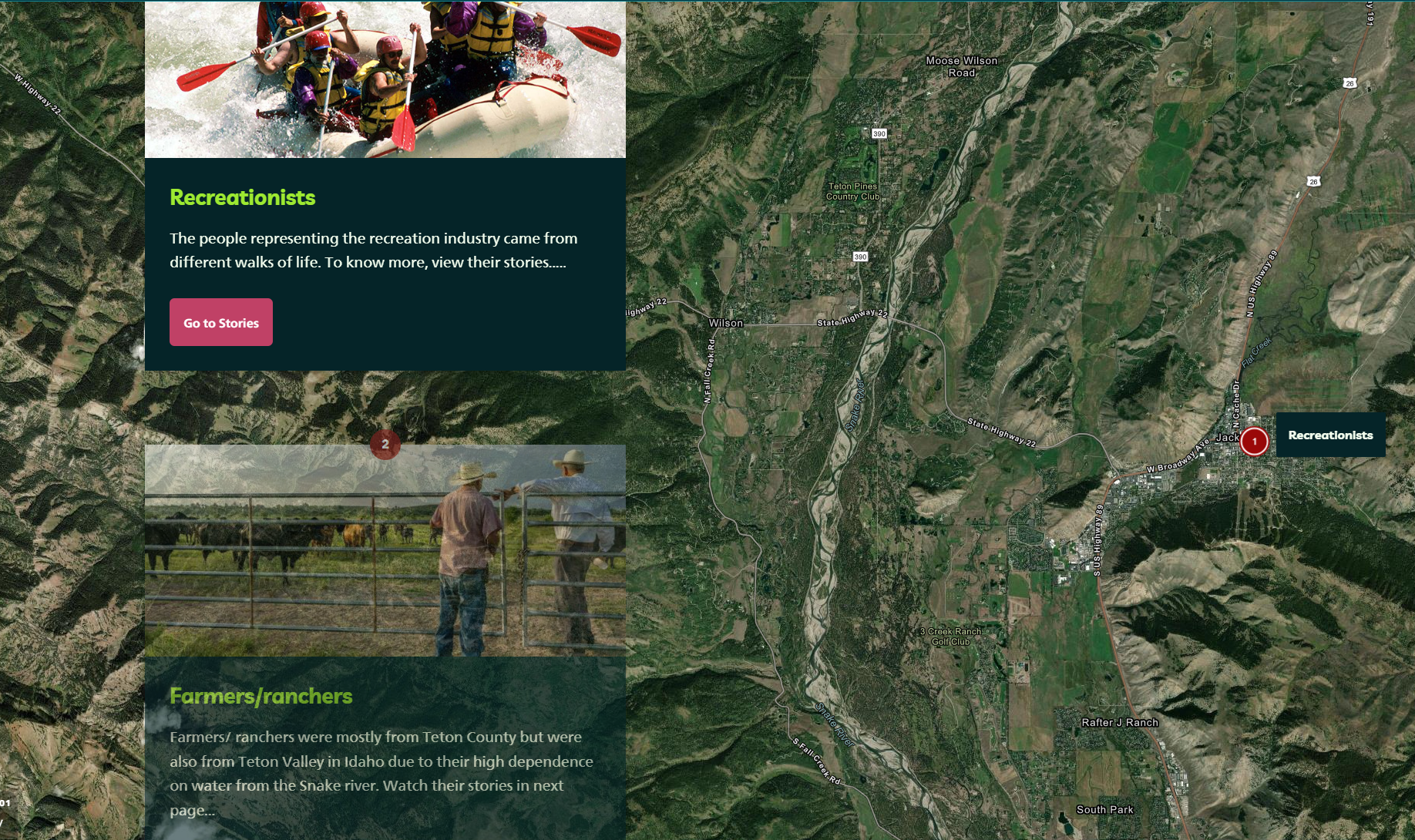
- StoryMaps, stream table activities, and data investigations allowed students to explore relationships among land use, ecosystems, and water systems
- Students visited Fontanelle Dam and Seedskadee Wildlife Refuge to observe water management and ecological systems
Resources & Links
Contact for More Information
For more details about this program or to learn how to incorporate similar activities in your school, please reach out to the TRKE program coordinators at smtcpd@uwyo.edu.